
Fixed vs Portable Diesel Tanks: Choosing for Your Farm
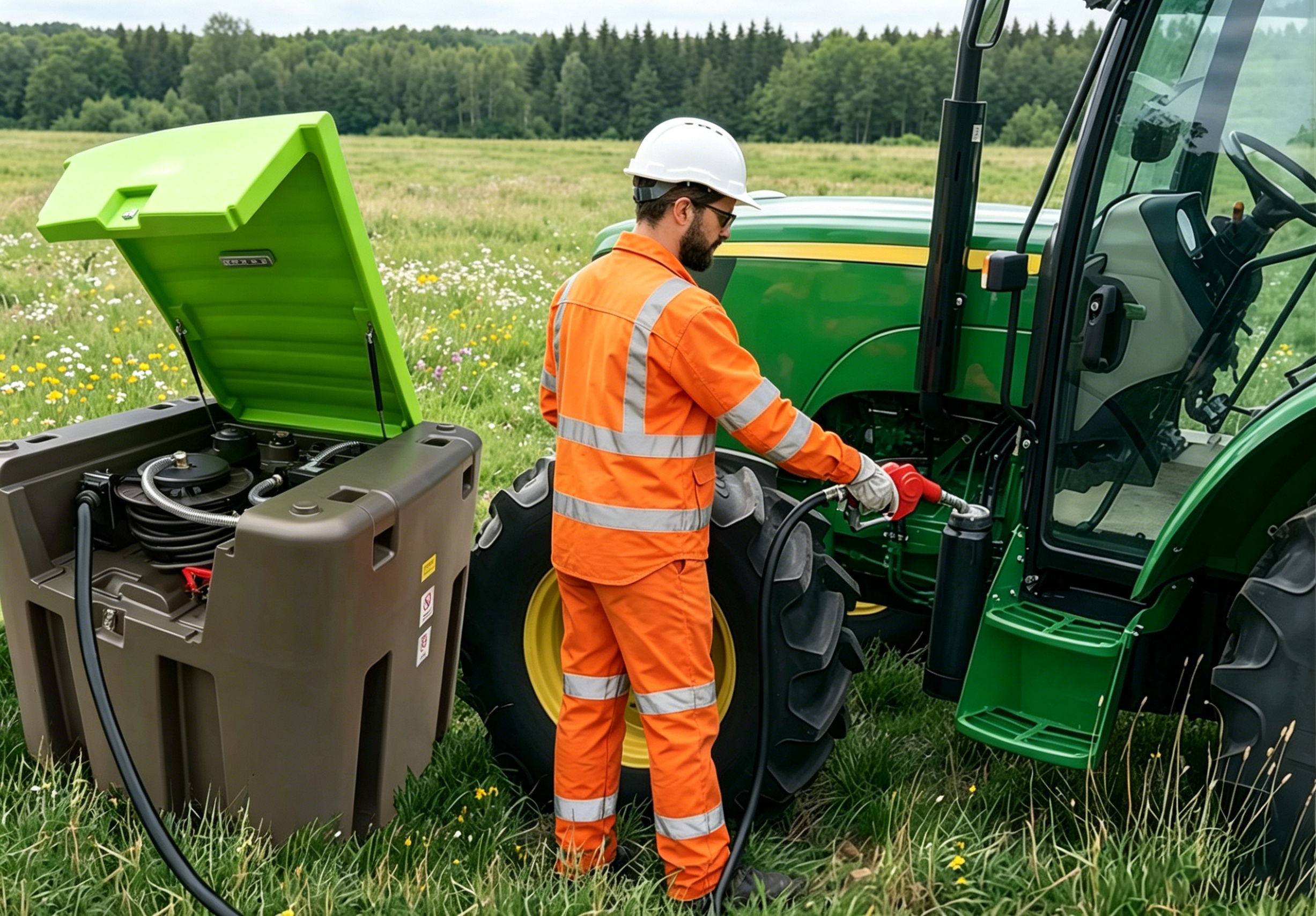
On a farm, diesel supports harvesting time, tractor hours and day-to-day operations. Choosing between a fixed tank and a portable tank starts with where the fuel is needed: in the yard or out in the field. Capacity, operating autonomy, spills and unauthorized access all matter.
Key takeaway: a fixed horizontal tank often suits centralized yard refueling and bulk deliveries. A portable transfer tank often suits scattered fields and machinery working far from the main yard.
Quick comparison: fixed and portable diesel tanks
Main purpose
Fixed horizontal tank
Portable or mobile tank
Typical capacity
Fixed horizontal tank
Portable or mobile tank
Installation
Fixed horizontal tank
Portable or mobile tank
Compliance and inspection
Fixed horizontal tank
Portable or mobile tank
Spill risk
Fixed horizontal tank
Portable or mobile tank
Unauthorized use
Fixed horizontal tank
Portable or mobile tank
Best fit
Fixed horizontal tank
Portable or mobile tank
1. Map your refueling locations
Before comparing specifications, answer four practical questions:
- Where does the machinery finish the day: in one yard, in a shed or spread across several locations?
- How many actual refueling points do you have?
- How often do you lose working time collecting diesel?
- Can the fuel delivery truck reach the proposed storage point easily?
If most activity takes place in the yard, a fixed tank can be the center of the system. If the work keeps moving, a portable tank can reduce travel and help machinery remain in the field.
2. Safety and spill management
A suitable system should support repeatable operating procedures and routine inspection.
Secondary containment
For a larger fixed installation, containment should be considered as part of the site design, alongside drainage, truck access and daily operation. For portable refueling, nozzle control, drip management, spill-response materials and operating procedures need particular attention.
Applicable containment requirements depend on the installation and jurisdiction. The EPA's agriculture SPCC guidance provides a starting point for evaluating a U.S. farm.
Bonding and grounding
Fuel transfer, hoses and movement can create static-control considerations. Follow the equipment manufacturer's bonding and grounding instructions and the requirements applicable to the fuel and installation.
Use a clear checklist, assign responsibility and maintain hoses and nozzles. Safe operation depends on consistent practice as well as equipment selection.
3. Choose capacity around the required operating window
Two common mistakes are buying an oversized fixed tank that holds fuel for too long, or choosing a portable tank so small that repeated refilling interrupts work.
First define how many days of fuel autonomy you need. Then confirm the tank size, delivery schedule and fuel turnover with the supplier.
4. Pump, power and hose: practical bottlenecks
These details determine whether the system works smoothly in everyday use:
- Available power: will you use a vehicle's 12V supply or an AC supply near the yard?
- Flow and duty cycle: will you refuel one or two machines or several in succession?
- Hose reach: can the hose reach the filling point without awkward vehicle positioning?
- Nozzle control: an appropriate automatic shut-off nozzle can help reduce overfilling caused by distraction.
Browse our tank collection for examples of portable transfer equipment.
5. A combined yard-and-field system
Many farms use a hybrid approach: a fixed yard tank for reserve capacity and centralized control, plus a portable tank for refueling where the machinery is working.
The portable system should include a stable mounting arrangement, a suitable pump, manageable hose and nozzle equipment, and a procedure defining who refuels, when and where.
Turn those operating needs into a written specification before requesting quotations.
6. Purchasing checklist
For a fixed yard tank
- Confirm location, drainage, delivery-truck access and distances from structures and traffic.
- Identify the secondary containment arrangement required for the installation.
- Define spill-control measures for filling and dispensing.
- Plan locks, fencing or lighting for access control.
- Establish how water and particles in the fuel will be checked.
For a portable field tank
- Confirm how the tank will be secured during movement.
- Specify the actual power supply.
- Check hose reach and access to the machine.
- Confirm nozzle control and drip management.
- Assign operators and a practical inspection checklist.
7. Which arrangement fits your farm?
Choose a fixed horizontal tank when you purchase in bulk, refuel mainly in the yard and want a centralized operating routine.
Choose a portable tank when work takes place far from the yard, fields are scattered or seasonal flexibility is important.
A combined system suits farms with a central yard that also need to avoid returning working machinery from distant fields just to refuel.
Frequently Asked Questions
Does my farm need an SPCC plan?
Applicability depends on total oil storage capacity, the nature of the facility and the potential for a discharge to regulated waters. Diesel is only part of the oil inventory that may be relevant. Review current EPA farm guidance and confirm the requirements for the specific site.
Does a portable tank avoid compliance requirements?
No. A portable arrangement can simplify some aspects but introduces transport, securing and operating responsibilities. Frequent use and larger volumes also justify formal procedures and documentation.
Why does the material matter?
Material affects weight, corrosion behavior and maintenance. Evaluate a polymer tank's resin specification, complete equipment compatibility and intended use rather than the material label alone.
Which is safer: fixed or portable?
Neither is automatically safer. A suitable system fits the workflow and includes operating procedures, hose and nozzle maintenance, spill control and access control.
Next steps
Prepare your approximate weekly consumption, number of machines refueled each day and available power supply. Those details help establish a suitable yard, field or combined configuration and make quotations easier to compare.
Contact our team to discuss your requirements.