
Preventing Water Contamination and Leaks in Outdoor Diesel Tanks
Key points
- High humidity and daily temperature changes can introduce water into outdoor diesel storage systems.
- Biodiesel-containing fuel requires attention to water, storage duration and fuel turnover.
- Correctly specified rotationally molded LLDPE tanks avoid rust from a steel tank body, but still need suitable seals, vents and maintenance.
- Appropriate containment, dispensing equipment and inspection routines help manage spill risk.
Why tropical outdoor storage needs attention
Agriculture, mining and infrastructure operations across South America depend on a continuous diesel supply. Outdoor tanks exposed to tropical conditions must cope with high humidity, rainfall, strong sunlight and changing temperatures.
The source operating examples describe relative humidity above 80% and daily temperatures ranging from about 15°C to more than 38°C. Actual conditions vary by location and season.
As a tank warms, air can expand and leave through the vent. As it cools, humid air can enter. Moisture can then condense on cooler surfaces and collect in the fuel system. How much water accumulates depends on the tank, venting, environment and operating routine.
Biodiesel-containing fuel can be particularly sensitive to water and storage conditions. Confirm the fuel blend, storage guidance and compatibility with the fuel and equipment suppliers.
How water affects stored diesel
1. Microbial growth
Free water can create conditions for microbial growth at the fuel-water interface. Often called diesel bug, contamination can produce sludge that blocks filters and disrupts fuel delivery.
Modern diesel equipment depends on clean fuel. Water and sludge can contribute to unplanned maintenance and operating interruptions.
2. Corrosion and particles
Water and microbial by-products can contribute to corrosion in susceptible metal components. Rust particles can enter the dispensing system and add to the contamination burden.
3. Rain entering through caps, seals and vents
Damaged filling caps, missing seals, exposed vents and unsuitable connections can allow rainwater into a tank. Inspect components exposed to sunlight and weather for deterioration.
Comparing steel and LLDPE tank construction
Material selection affects corrosion behavior, weight, handling and maintenance. The complete design remains important for either material.
Rust from the tank body
Steel tank
Rotationally molded LLDPE tank
Outdoor protection
Steel tank
Rotationally molded LLDPE tank
Temperature and condensation
Steel tank
Rotationally molded LLDPE tank
Field handling
Steel tank
Rotationally molded LLDPE tank
Potential leak points
Steel tank
Rotationally molded LLDPE tank
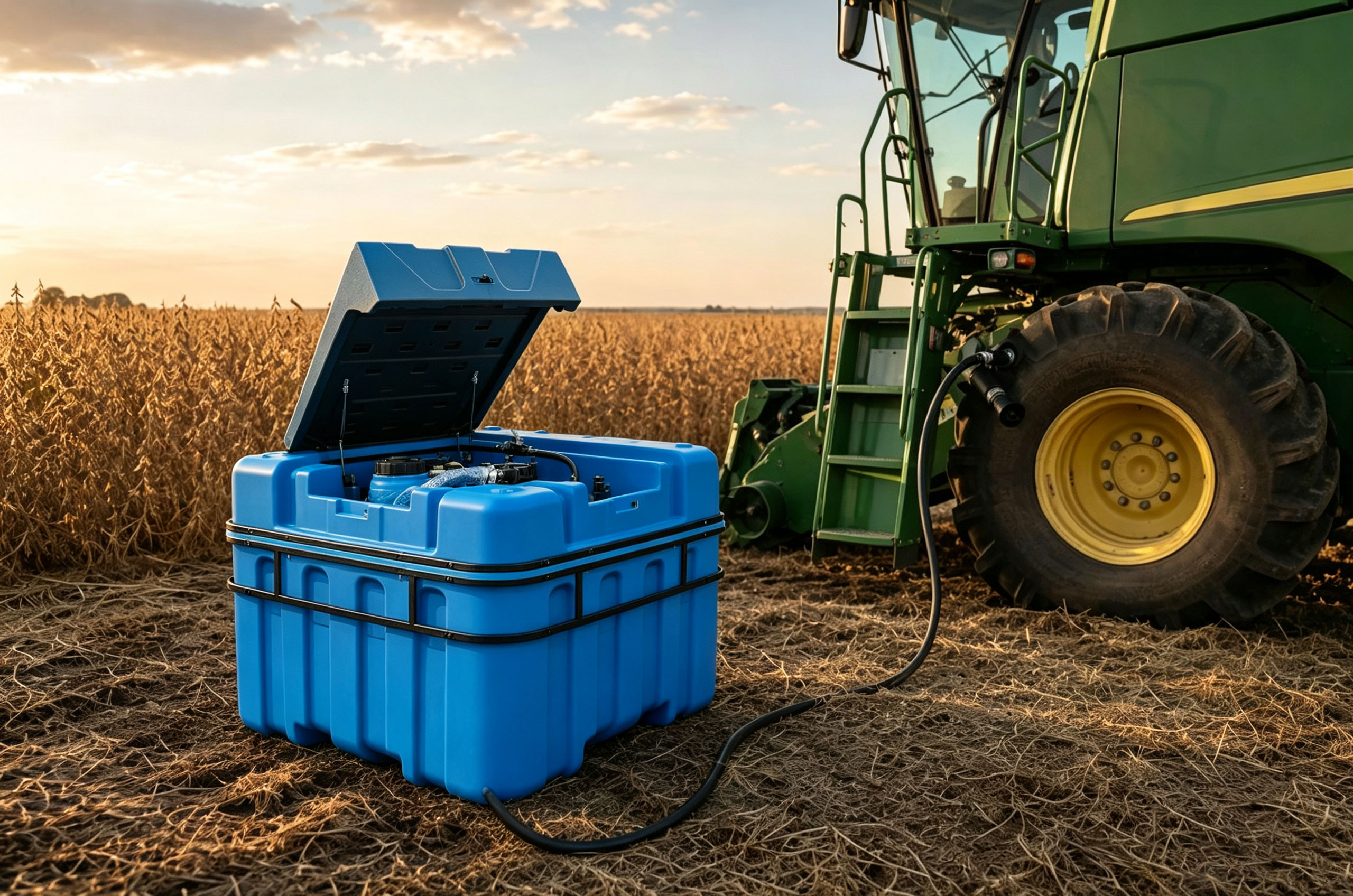
A suitable LLDPE portable tank can offer a one-piece body, resistance to rust and handling features such as forklift pockets or securing recesses where the model provides them.
For installations requiring secondary containment, select a containment arrangement suited to the project and applicable requirements. Confirm its rated capacity and construction. A standard single-wall portable tank should not be assumed to be self-bunded or double-walled.
The source range includes complete dispensing systems with electrical pumps, hoses and controlled nozzles. Check each model's actual specifications, and protect the equipment from rain, dirt and unauthorized access.
Five practices for managing water and leaks
1. Manage headspace and fuel turnover
Large changes in headspace and repeated temperature cycles can influence moisture accumulation. Plan replenishment around actual use while following the manufacturer's maximum fill level and required expansion space. Do not overfill a tank to reduce air space.
2. Use suitable shade or weather protection
Where practical, place the equipment under a suitable ventilated cover to reduce direct sunlight and heavy rain exposure. Follow installation requirements and keep vents unobstructed.
3. Select appropriate water-separating filtration
Discuss a compatible water-separating filter with the supplier rather than relying only on the machine's primary fuel filter. Match the filter to fuel type, rated flow and the equipment's requirements.
A micron rating alone does not establish water-removal performance. Confirm the filter's function and inspection instructions for the intended system.
4. Protect vents and keep covers secured
Check the specified vent and filling-cap arrangement and keep protective covers secured when appropriate. Remove standing water from a cover before opening it so it cannot fall into the filling area.
5. Inspect for water at the low point
Water can settle below diesel. Establish a suitable inspection and removal routine in accordance with the tank and fuel suppliers' instructions, and arrange appropriate handling of any removed contaminated liquid.
A preventive maintenance schedule
Use the following starting points to build a routine appropriate to the equipment and local conditions.
Daily and after rain
Inspection
Action
Weekly
Inspection
Action
Every two weeks
Inspection
Action
Monthly
Inspection
Action
Quarterly
Inspection
Action
Frequently Asked Questions
How can I recognize possible water contamination?
Cloudiness, visible water separation or sludge can indicate a problem. Equipment symptoms such as restricted fuel delivery or repeated filter blockage also deserve investigation. Appearance alone is not a complete fuel-quality test.
How do steel and LLDPE differ in a humid environment?
A polyethylene body does not produce rust flakes, while susceptible steel requires corrosion management. Both designs still require inspection of the cap, vents, hose, nozzle, seals and fittings.
Why consider secondary containment?
Containment can help retain a leak or spill before it reaches surrounding soil or water. Its required form and capacity depend on the site and applicable rules. Verify the actual system rather than assuming a model has an integrated outer tank.
Protecting machinery through better storage
Tropical conditions are demanding, but appropriate equipment and routine maintenance can reduce water contamination and spill risk. Match the tank, pump and filtration system to the application and maintain a practical inspection schedule.
Contact our team to discuss a tank configuration for your project.