
LLDPE vs HDPE: Choosing a Portable Diesel Transfer Tank
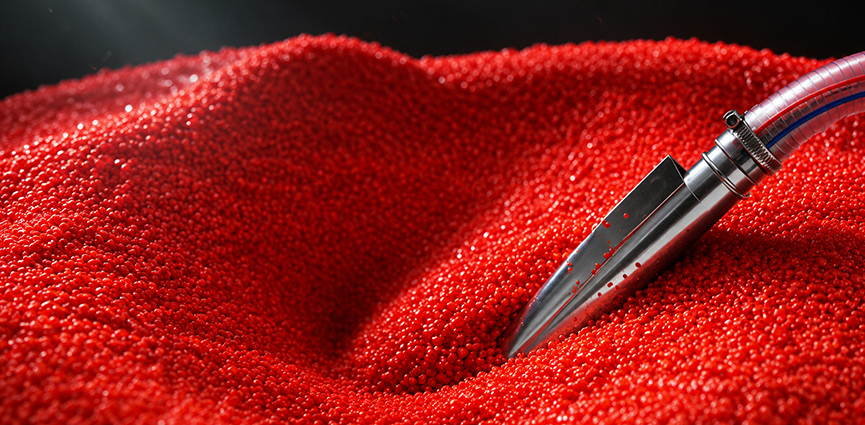
Comparing LLDPE and HDPE for a portable diesel transfer tank is about more than choosing between two plastics. It means considering how the tank will behave when it is knocked, secured in a pickup, left in sunlight and exposed to vibration and changing temperatures.
This evaluation guide explains the purchasing criteria. It is not a substitute for the specifications of a particular tank.
Quick comparison: LLDPE and HDPE
Impact and rough handling
LLDPE
HDPE
Environmental stress cracking
LLDPE
HDPE
Rigidity and shape
LLDPE
HDPE
Sunlight and weather
LLDPE
HDPE
Rotational molding
LLDPE
HDPE
Key takeaway: the choice is rarely just LLDPE or HDPE. Evaluate the material, UV stabilization and complete design, including wall thickness, reinforcement, fittings, venting, cap and valves.
1. Impact, vibration and rough handling
A portable tank can face forklift handling, securing straps, uneven roads and accidental knocks.
- LLDPE is often preferred where impact risk is high because its flexibility can help absorb energy.
- HDPE contributes rigidity and can limit movement, but greater rigidity does not automatically mean better resistance to a concentrated impact.
Consider how you will use the tank:
- Will it travel frequently in a pickup, UTV or trailer?
- Will it be handled by machinery or several people?
- Will it operate in cold weather, where impact performance becomes especially important?
If several answers are yes, toughness and impact resistance deserve significant weight in the purchase decision.
2. Environmental stress crack resistance
ESCR means Environmental Stress Crack Resistance. Some cracks develop through a combination of ongoing stress, small surface defects and chemical or environmental exposure rather than one large impact.
- Continuous loads can come from securing straps, vibration and the weight of the liquid.
- Scratches, sharp corners and other stress concentrations can become initiation points.
- Fuel, cleaning chemicals and outdoor exposure also affect service conditions.
This matters in rotationally molded tanks because a stressed area may deteriorate over a long period before a crack becomes visible. LLDPE is recognized for good stress-crack resistance, while HDPE performance depends strongly on the exact resin, additives and design.
Density is also closely related to polyethylene stiffness. Ask the manufacturer for the actual material specification rather than relying on a material name alone.
3. Rigidity and dimensional stability
Rigidity is useful when it improves the stability of the whole installation. It can be important when:
- The tank regularly operates partially filled, allowing the liquid to move.
- The pump, cap and mounting hardware need firm support.
- Visible temperature-related deformation needs to be minimized.
HDPE can feel more solid in these situations. However, a very rigid tank still needs suitable reinforcement, corner radii and consistent wall thickness. Otherwise, stress can concentrate around corners, outlets and mounting points.
4. Sunlight and outdoor exposure
For an outdoor installation, UV stabilization is as important as the basic resin choice. Poorly stabilized polyethylene can become brittle with exposure; suitable UV additives and pigments help protect performance.
Ask the supplier:
- Is the tank specified for continuous outdoor service?
- Are the color and surface finish consistent?
- What storage recommendations apply, including shade or a protective cover?
5. Diesel compatibility involves the whole system
LLDPE and HDPE are used for many liquid-containment applications, including fuels when the correct grade and design are selected. A diesel transfer tank must be evaluated as a complete assembly.
- The cap, vents, seals, valves, hose and pump must all be suitable for diesel.
- Temperature, sunlight, storage duration and cleaning practices must match the intended operating conditions.
DEF or AdBlue requires separate storage and dedicated compatible equipment to prevent contamination.
6. What to check beyond the material
- One-piece construction: rotational molding can reduce the number of joints in the tank body.
- Wall thickness and geometry: look for consistent walls and generous corner radii.
- Secure filling cap: check protection against dust, water and unauthorized access.
- Venting: use the specified arrangement for pressure and vacuum management.
- Pump and hose: confirm flow, electrical supply, cable protection and nozzle suitability.
- Spill control: consider containment, nozzle control and a regular inspection routine.
Explore our diesel tank collection to compare available configurations.
7. Choosing for your operating conditions
Consider LLDPE when:
- The tank will move frequently between pickups, sites and uneven routes.
- Impact resistance and rough handling are major concerns.
- Environmental stress-crack resistance is a priority.
Consider HDPE when:
- High rigidity is particularly important for the mounting arrangement.
- The installation places demanding requirements on dimensional stability.
For either material, obtain clear information about UV stabilization if the tank will remain outdoors in direct sunlight.
8. When separate compartments are useful
If an operation needs both diesel and DEF or AdBlue, consider a design with separate compartments and dedicated components. A combined system can simplify logistics while keeping the fluids and their dispensing equipment apart.
Confirm each compartment's fluid compatibility and capacity rather than assuming that a single tank or shared pump is suitable for both liquids.
Frequently Asked Questions
Is LLDPE better than HDPE for a portable tank?
It depends on the application. Buyers focused on portability and rough handling often prioritize impact resistance and ESCR. Where rigidity is the main requirement, HDPE may be a suitable choice.
Can I decide from the material name alone?
No. Actual performance also depends on UV formulation, wall thickness, corner geometry, the molding process and the complete cap, vent, pump and hose system.
What should I ask before buying?
Ask about outdoor use, UV protection, vent design, hose and seal compatibility, and recommended operating and maintenance practices. Share your application with our team to discuss a suitable configuration.